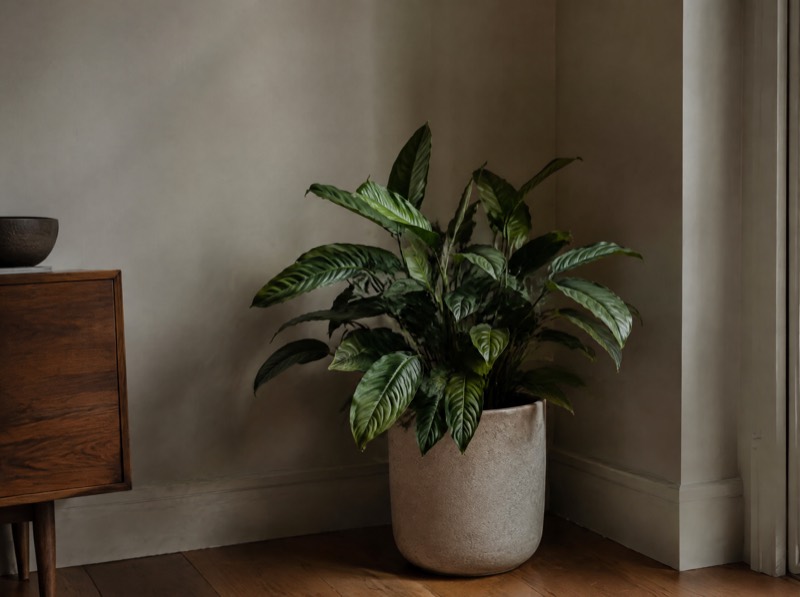
Not every room gets a sunny window. These plants not only tolerate indirect light — they prefer it, and will thank you for the shade.
Every houseplant guide begins with “bright, indirect light” and ends with a plant that died in a north-facing living room. The truth is that plenty of plants evolved under a forest canopy, and a room that feels dim to you can feel like a holiday to them. You just have to pick the right species.
How little light is “low light”?
Low light means a room where you can read comfortably without switching on a lamp during the day, but where no direct sun ever lands on the leaves. Most north-facing rooms and corridors count. A dark corner with no window in sight does not — no plant will thrive there, and the sooner you accept that, the better for your plant budget.
The reliable five
Snake plant (Sansevieria) tolerates almost anything except overwatering. ZZ plant (Zamioculcas) is equally forgiving and glossy. Pothos grows happily in indirect light and tells you when it wants water by drooping dramatically. Peace lily flowers even in shade if watered consistently. Spider plant is cheerful, fast-growing and makes more of itself for free.
The rules that matter more than light
In low light, everything happens more slowly: growth, water uptake, recovery. Water much less often — the soil stays wet far longer, and overwatering is the number one killer of shade plants. Feel the compost before you water, every time. And keep leaves clean; dust blocks the little light there is.
Help them along
Wipe leaves monthly with a damp cloth. Rotate pots a quarter turn each week so they grow evenly towards the light. If a plant becomes leggy and pale, move it closer to the window rather than feeding it more — fertiliser does not replace light.
Accept slower growth
A low-light plant is not a failing plant. It grows slowly, drinks slowly, and asks little. That is the deal, and it is a good one. Match the plant to the room, and the room will be green for years.