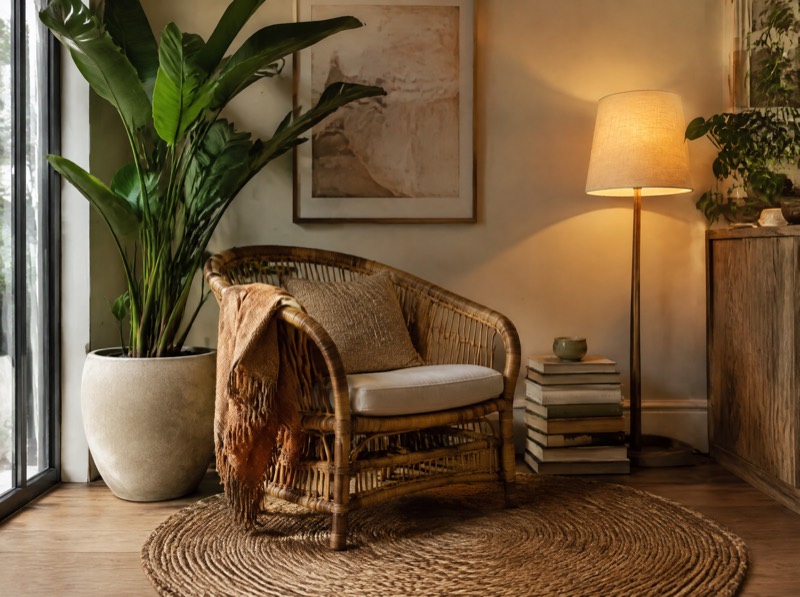
More plants is not always the answer. On grouping, height, and making a plant corner that looks considered rather than accidental.
The internet's answer to “how do I make my home greener?” is always “more plants”. But a room stuffed without thought looks less like a jungle and more like a garden centre in a hurry. A few plants, arranged well, will always beat a crowd.
Three heights, one corner
The most reliable arrangement is three levels: a floor plant, a table or shelf plant, and something trailing. A monstera or fiddle-leaf fig for height, a pothos or philodendron trailing from a shelf, and two or three small pots at eye level. The eye reads the triangle and the corner feels finished.
Group, don't scatter
A group of pots reads as one composition; pots spread across every surface read as clutter. Pick one or two corners and go deeper there. Grouping also raises humidity around the leaves, which most tropicals appreciate.
Vary the pots, not the chaos
Matching pots can look sterile; total variety looks accidental. The middle path: choose a palette — terracotta, cream ceramic, woven baskets — and mix within it. Keep sizes varied and let one pot be the odd one out.
Let the plants be the colour
If the plants are the point, keep the surrounding furniture quiet. A neutral wall, a simple chair, and one good lamp let the green do the talking. A plant corner set against a busy wallpaper is a conversation with no silences in it.
Leave breathing room
Plants need light and airflow; a corner needs negative space. Leave a hand's width between pots, and leave part of the surface empty. The empty space is what makes the group look intentional — and it gives the plants room to grow into.