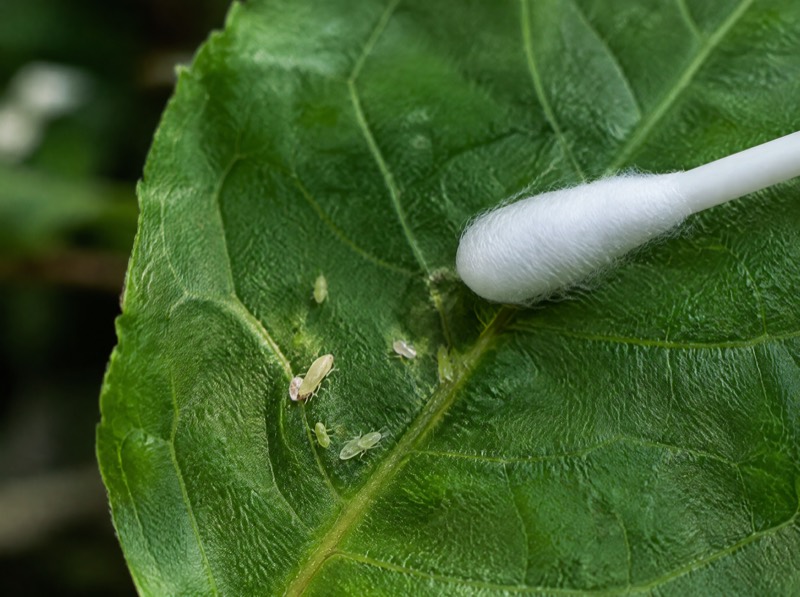
Sticky leaves, fine webs, little white clouds. A field guide to the five houseplant pests you will actually meet, and what to do about each.
Every houseplant owner eventually notices something: a sticky film on a leaf, a cloud of tiny white insects when the plant is disturbed, a fine web between the stems. By then the infestation has usually been underway for weeks. Learning to look for the early signs turns pest control from an emergency into routine maintenance.
Aphids
Small, pear-shaped, usually green or black, clustered on new growth and flower buds. They excrete honeydew, which makes leaves sticky and invites sooty mould. Treatment: a firm jet of water, then a soap spray (a teaspoon of pure soap in a litre of water), repeated weekly until clear.
Spider mites
Almost invisible individually; the giveaway is a fine web and a stippled, faded look to the leaves. They thrive in hot, dry air. Treatment: raise humidity, wash the plant thoroughly, and repeat every few days — mites breed fast, so one treatment is never enough.
Whitefly
Tiny white insects that fly up in a cloud when you move the plant. They cluster under leaves. Treatment: yellow sticky traps to reduce numbers, soap spray for the rest, and check neighbouring plants — whitefly spreads.
Fungus gnats
Small black flies around the soil, harmless to the plant but annoying. Their larvae live in wet compost. Treatment: let the top of the soil dry out between waterings and use sticky traps for the adults. The real cure is watering discipline.
Mealybug
White, cottony blobs in leaf joints and along stems. Treatment: remove with a cotton bud dipped in dilute alcohol, then treat the whole plant with soap spray. Check every crevice — mealybug hides well.
The habit that prevents most of it
Look at your plants closely once a week: lift a leaf, check the joints, look at the underside. Five minutes of inspection will catch almost every infestation while it is still small — which is the only time pest control is easy.